


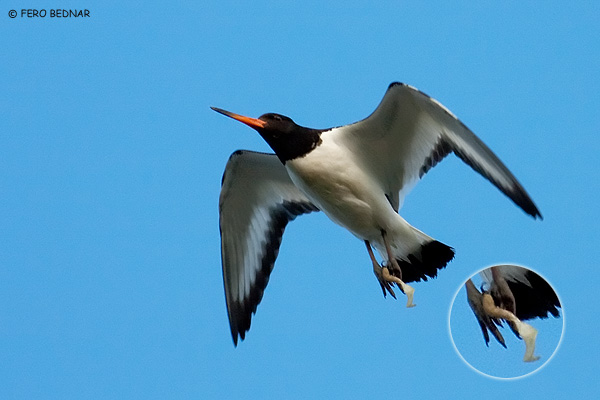
Haematopus ostralegus · lastúrničiar strakatý · Eurasian Oystercatcher
Alternative and historical names
Slovak names
- lastúrničiar strakatý (Kovalik 2010)
- ustričník veľký (Kovalik 2010)
- lastúrničiar strakatý (Matoušek 1990)
English names
- Eurasian Oystercatcher (IOC 2.5 2010)
- Oyster-catcher (BOU 1923)
Scientific names
- Haematopus ostralegus (AviList 2026)
- Haematopus ostralegus (IOC 15.2 2026)
- Haematopus ostralegus (IOC 2.5 2010)
- Haematopus ostralegus (BOU 1923)
Taxonomic synonyms
- Haematopus ostralegus Linnaeus, 1758
Birding Slovakia database
This species through our community’s eyes
Photographs by category
Species characteristics in Slovakia
- Migration
- rare transmigrant / Tr
- Rarities committee:
- Sigthings of this specie are registered by Raritties commitee
Observation map
Detailed species observation statistics

Source: the Birding.sk database. Counts reflect observer contributions, not population size.
About this species
Distribution
Eurasian Oystercatcher breeds on coasts and locally inland in Europe and Asia. In Slovakia it is a rare visitor, mainly on passage, appearing singly or in small groups. It is neither a regular breeder nor a regular wintering species here. Seashores are much more typical of its life than Slovak inland waters.
Habitat
Native habitats include marine coasts, but also inland rivers and meadows. In Slovakia, search gravel bars, islands and open shores of larger waters, offering both resting space and accessible invertebrates.
Breeding
Within its breeding range, it usually lays 2–4 eggs in an open scrape on gravel, sand or other sparsely vegetated ground. Both parents defend the territory and bring food to chicks even though the young can already walk.
Food
On coasts it chiefly takes bivalves and other invertebrates, while inland it also uses earthworms and insects. The strong bill enables prey to be opened, extracted or prised from the substrate.
Interesting fact
Individuals may specialise in different ways of opening shells. Young birds gradually learn to obtain difficult prey, which helps explain the unusually prolonged parental assistance with feeding.
Sources: Slovak Wikipedia · English Wikipedia
Sign in to send private feedback on the text to our editors.
Explore further
Overview and identification
Descriptions, identification and names.
- Slovak Wikipedia ↗
Taxon account in Slovak: distribution, biology and references for further reading.
https://sk.wikipedia.org/wiki/Last%C3%BArni%C4%8Diar_strakat%C3%BD - English Wikipedia ↗
Taxon account in English: distribution, biology and taxonomic context.
https://en.wikipedia.org/wiki/Eurasian_oystercatcher
























