


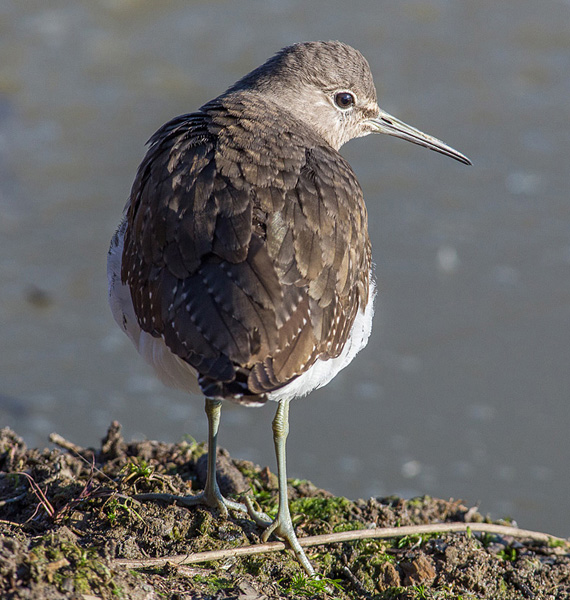
Tringa ochropus · kalužiak perlavý · Green Sandpiper
Alternative and historical names
Slovak names
- kalužiak perlavý (Kovalik 2010)
- kalužiak perlový (Kovalik 2010)
- kalužiak perlavý (Matoušek 1990)
English names
- Green Sandpiper (IOC 2.5 2010)
- Green Sandpiper (BOU 1923)
Scientific names
- Tringa ochropus (AviList 2026)
- Tringa ochropus (IOC 15.2 2026)
- Tringa ochropus (IOC 2.5 2010)
- Tringa ochropus (BOU 1923)
Taxonomic synonyms
- Helodromus ochropus (Linnaeus, 1758)
- Rhyacophilus ochropus (Linnaeus, 1758)
- Totanus ochropus (Linnaeus, 1758)
- Tringa spec (Linnaeus, 1758)
- Tringa ochropus Linnaeus, 1758
Birding Slovakia database
This species through our community’s eyes
Species characteristics in Slovakia
- Migration
- common transmigrant / Tc
- Wintering
- uncommon wintering / Wu
- Rarities committee:
- Does not require any reporting or registration by Raritties commitee
Observation map

Detailed species observation statistics

Source: the Birding.sk database. Counts reflect observer contributions, not population size.
About this species
Distribution
Its breeding range lies in northern and eastern Europe and extends across Asia. It winters from milder European regions to Africa and southern Asia. In Slovakia it occurs regularly on spring and return migration, the latter beginning in summer. Small numbers remain at unfrozen water in winter. Summer presence alone does not demonstrate breeding.
Habitat
Unlike many waders, it uses tiny woodland pools, ditches and shaded streams. Migrants also visit fishpond mud and flooded meadows. Birds are usually solitary or present in small numbers.
Breeding
In northern forests it occupies old tree nests of other birds, such as thrushes. The clutch usually contains four eggs. This nesting position is unusual among waders; the chicks move to the ground after hatching.
Food
It takes small insects, larvae and other invertebrates from soft mud and shallow water, steadily working around the margins of small pools.
Interesting fact
In flight the white rump contrasts sharply with the dark back and wings. Together with its piercing call, this helps identify a bird previously hidden in bankside shade.
Sources: Slovak Wikipedia · English Wikipedia
Sign in to send private feedback on the text to our editors.
Explore further
Overview and identification
Descriptions, identification and names.
- Slovak Wikipedia ↗
Taxon account in Slovak: distribution, biology and references for further reading.
https://sk.wikipedia.org/wiki/Kalu%C5%BEiak_perlav%C3%BD - English Wikipedia ↗
Taxon account in English: distribution, biology and taxonomic context.
https://en.wikipedia.org/wiki/Green_sandpiper - BTO: Identifying Wood Sandpipers and Green Sandpipers ↗
English identification video comparing this taxon with similar species and explaining distinguishing features.
https://www.bto.org/learn/skills/bird-identification/videos/wood-and-green-sandpiper


