


Gavia arctica · potáplica stredná · Black-throated Loon
Alternative and historical names
Slovak names
- potáplica stredná (Kovalik 2010)
- potáplica severná (Kovalik 2010)
- potáplica severská (Kovalik 2010)
- potáplica väčšia (Kovalik 2010)
- potáplica severská (Matoušek 1990)
English names
- Black-throated Loon (IOC 2.5 2010)
- Black-throated Diver (BOU 1923)
Scientific names
- Gavia arctica (AviList 2026)
- Gavia arctica (IOC 15.2 2026)
- Gavia arctica (IOC 2.5 2010)
- Colymbus arctica (BOU 1923)
Taxonomic synonyms
- Colymbus arcticus (Linnaeus, 1758)
- Urinator arcticus (Linnaeus, 1758)
- Gavia arctica (Linnaeus, 1758)
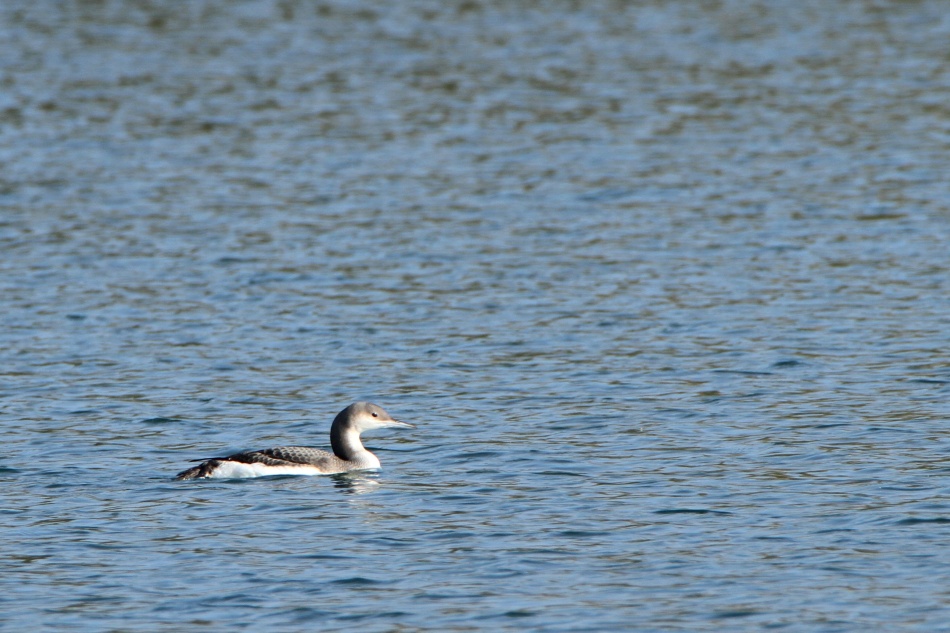
Birding Slovakia database
This species through our community’s eyes
Photographs by category
Species characteristics in Slovakia
- Migration
- uncommon transmigrant / Tu
- Wintering
- rare wintering / Wr
- Rarities committee:
- Does not require any reporting or registration by Raritties commitee
Observation map

Detailed species observation statistics

Source: the Birding.sk database. Counts reflect observer contributions, not population size.
About this species
Distribution
The Black-throated Diver breeds on northern lakes in Europe and Asia. Outside the breeding season it moves mainly to marine coasts. Slovakia lies south of its breeding range: it is a regular but scarce migrant and winter visitor. Autumn, especially October and November, offers the best chance of seeing it, with smaller numbers remaining in winter. It passes north again in spring and does not breed here.
Habitat
Its breeding habitat consists of larger northern lakes, while it winters mainly in coastal waters. In Slovakia it favours the open water of large reservoirs, gravel pits and broader rivers. It often feeds far offshore, making a telescope and patient scanning of the water particularly useful.
Breeding
It does not breed in Slovakia. On northern breeding grounds it usually lays two eggs immediately beside the water, often on an islet or low shore. Both partners share parental duties. The nest's position reflects the bird's close dependence on water.
Food
It mainly hunts fish, pursuing them in active dives. It also takes aquatic invertebrates and other small aquatic prey.
Interesting fact
Legs set far back on the body provide excellent propulsion underwater but make movement on land very difficult. This helps explain why the nest is at the water's edge and why the bird spends most of its life swimming, diving or flying.
Sources: Slovak Wikipedia · BTO BirdFacts · English Wikipedia
Sign in to send private feedback on the text to our editors.
Explore further
Overview and identification
Descriptions, identification and names.
- Slovak Wikipedia ↗
Taxon account in Slovak: distribution, biology and references for further reading.
https://sk.wikipedia.org/wiki/Pot%C3%A1plica_stredn%C3%A1 - BTO BirdFacts ↗
Biology and identification in English; population figures and trends refer to Britain.
https://www.bto.org/learn/about-birds/birdfacts/black-throated-diver - English Wikipedia ↗
Taxon account in English: distribution, biology and taxonomic context.
https://en.wikipedia.org/wiki/Black-throated_loon - BTO: Identifying winter divers ↗
English identification video comparing this taxon with similar species and explaining distinguishing features.
https://www.bto.org/learn/skills/bird-identification/videos/winter-divers
Data and research
Occurrences, distribution and research.
- State Nature Conservancy: identification, ecology and conservation – Gavia arctica ↗
Slovak expert profile with morphology, ecology and species conservation information.
https://www.biomonitoring.sk/Registration/AtlasAnimal/Detail/48728


