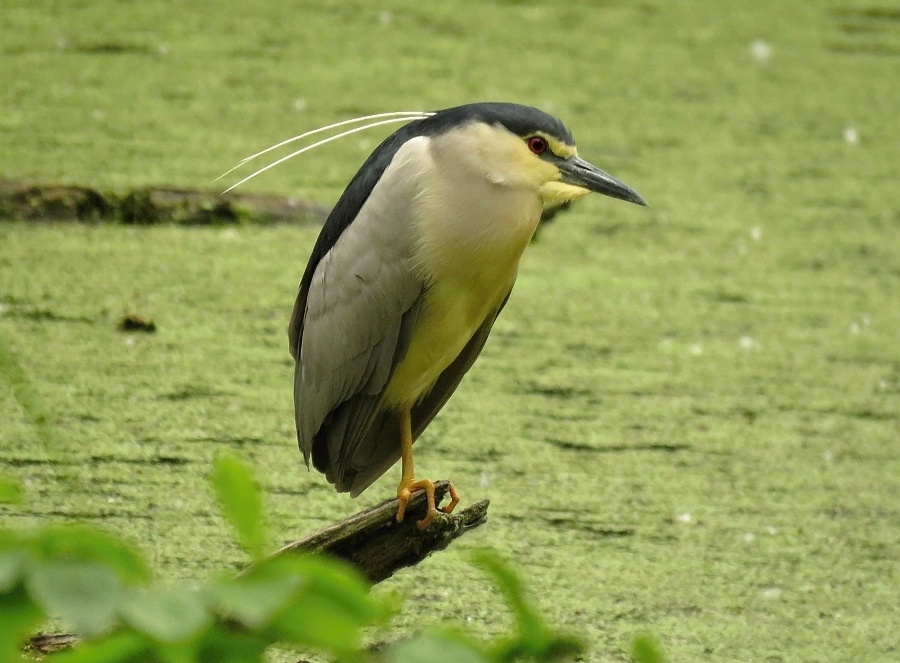
Nycticorax nycticorax · chavkoš nočný · Black-crowned Night Heron
Alternative and historical names
Slovak names
- chavkoš nočný (Kovalik 2010)
- iak nočný (Kovalik 2010)
- bučiak nočný (Matoušek 1990)
English names
- Black-crowned Night Heron (IOC 2.5 2010)
- Night-Heron (BOU 1923)
Scientific names
- Nycticorax nycticorax (AviList 2026)
- Nycticorax nycticorax (IOC 15.2 2026)
- Nycticorax nycticorax (IOC 2.5 2010)
- Nycticorax nycticorax (BOU 1923)
Taxonomic synonyms
- Ardea nycticorax (Linnaeus, 1758)
- Ardea spec (Linnaeus, 1758)
- Nycticorax nycticorax (Linnaeus, 1758)
Birding Slovakia database
This species through our community’s eyes
Species characteristics in Slovakia
- General occurrence
- migrant / M
- Breeding
- uncommon nidificant / Nu
- Rarities committee:
- Does not require any reporting or registration by Raritties commitee
Observation map

Detailed species observation statistics

Source: the Birding.sk database. Counts reflect observer contributions, not population size.
About this species
Distribution
It is widespread across Europe, Asia, Africa and the Americas. In Slovakia it breeds locally, especially in lowland wetlands, and is mainly migratory. It may be conspicuous around colonies, but is not a common breeder nationwide. Most Slovak birds spend winter outside the country, primarily in Africa.
Habitat
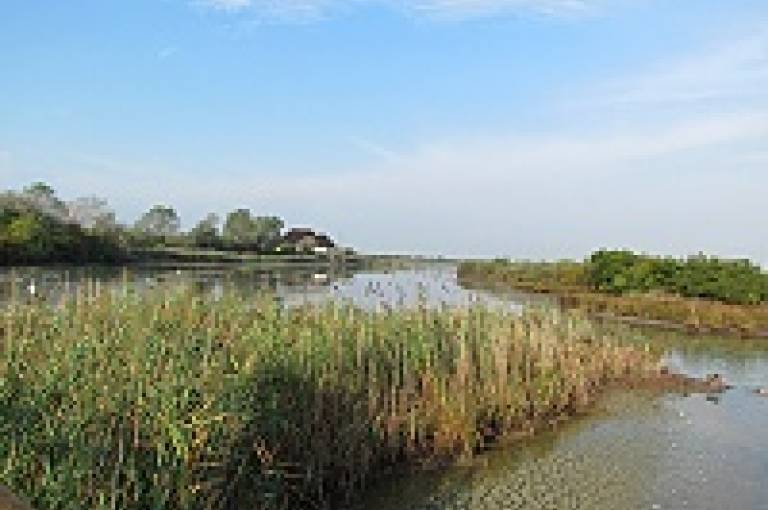
It uses fishponds, river arms and flooded woodland with dense trees or bushes for resting. During the day it may remain unseen in cover, leaving for feeding sites at dusk. When provisioning chicks it can also be active in daylight.
Breeding
It nests colonially, often alongside other herons, placing a stick nest in a tree or bush. Both parents share incubation and feed the young, which later clamber onto surrounding branches.
Food
It takes fish, amphibians, aquatic invertebrates and other available small prey. It often waits on a bank or branch immediately above the water.
Interesting fact
A young Night Heron looks very different from an adult: it is brown with numerous pale spots. The adult's black-and-grey plumage and long white nape feathers therefore cannot be expected in every sighting.
Sources: Slovak Wikipedia · English Wikipedia · BTO BirdFacts
Sign in to send private feedback on the text to our editors.
Explore further
Overview and identification
Descriptions, identification and names.
- Slovak Wikipedia ↗
Taxon account in Slovak: distribution, biology and references for further reading.
https://sk.wikipedia.org/wiki/Chavko%C5%A1_no%C4%8Dn%C3%BD - English Wikipedia ↗
Taxon account in English: distribution, biology and taxonomic context.
https://en.wikipedia.org/wiki/Black-crowned_night_heron - BTO BirdFacts ↗
Biology and identification in English; population figures and trends refer to Britain.
https://www.bto.org/learn/about-birds/birdfacts/night-heron
Data and research
Occurrences, distribution and research.
- State Nature Conservancy: identification, ecology and conservation – Nycticorax nycticorax ↗
Slovak expert profile with morphology, ecology and species conservation information.
https://www.biomonitoring.sk/Registration/AtlasAnimal/Detail/48807