


Caprimulgus europaeus · lelek lesný · European Nightjar
Alternative and historical names
Slovak names
- lelek lesný (Kovalik 2010)
- lelek obyčajný (Kovalik 2010)
- lelek lesný (Matoušek 1990)
- lelek obyčajný (Ferianc 1958)
English names
- European Nightjar (IOC 2.5 2010)
- Nightjar (BOU 1923)
Scientific names
- Caprimulgus europaeus (AviList 2026)
- Caprimulgus europaeus (IOC 15.2 2026)
- Caprimulgus europaeus (IOC 2.5 2010)
- Caprimulgus europaeus (BOU 1923)
Taxonomic synonyms
- Caprimulgus europaeus Linnaeus, 1758
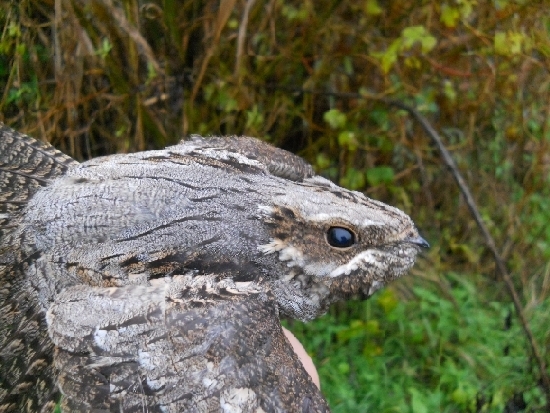
Birding Slovakia database
This species through our community’s eyes
Species characteristics in Slovakia
- General occurrence
- migrant / M
- Breeding
- uncommon nidificant / Nu
- Migration
- uncommon transmigrant / Tu
- Rarities committee:
- Does not require any reporting or registration by Raritties commitee
Conservation — Red Lists
- Slovakia 2023breeding population
- Breeding population Period: 2013–2023 Source: Demko M. a kol. 2025: Červený zoznam vtákov Slovenska: aktualizácia 2013 – 2023. Tichodroma 37: 107–117. Online 18. 1. 2026. DOI: 10.31577/tichodroma.2025.37.18. Príloha 1, s. 117, riadok 59, stĺpec 6 Criteria: C1
- Europe 2021
- Population scope unspecified Source: BirdLife International 2021: European Red List of Birds. Publications Office of the European Union, Luxembourg. Reported in: Demko M. a kol. 2025: Červený zoznam vtákov Slovenska: aktualizácia 2013 – 2023. Tichodroma 37: 107–117. Online 18. 1. 2026. DOI: 10.31577/tichodroma.2025.37.18. Príloha 1, s. 117, riadok 59, stĺpec 4
- World 2025
- Species Source: BirdLife International 2025: Species factsheets. Citované v Demko a kol. 2025, prístup 16. 4. 2025. Reported in: Demko M. a kol. 2025: Červený zoznam vtákov Slovenska: aktualizácia 2013 – 2023. Tichodroma 37: 107–117. Online 18. 1. 2026. DOI: 10.31577/tichodroma.2025.37.18. Príloha 1, s. 117, riadok 59, stĺpec 3
Previous assessments
- Slovakia 2013
- Breeding population Period: 2002–2012 Source: Demko M., Krištín A. & Pačenovský S. 2014: Červený zoznam vtákov Slovenska. SOS/BirdLife Slovensko, Bratislava. Zdroj stĺpca SK 2013 podľa poznámky 5 prílohy Demko a kol. 2025. Reported in: Demko M. a kol. 2025: Červený zoznam vtákov Slovenska: aktualizácia 2013 – 2023. Tichodroma 37: 107–117. Online 18. 1. 2026. DOI: 10.31577/tichodroma.2025.37.18. Príloha 1, s. 117, riadok 59, stĺpec 5 Category downgraded by 1 level due to surrounding populations.
Observation map

Detailed species observation statistics

Source: the Birding.sk database. Counts reflect observer contributions, not population size.
About this species
Distribution
Nightjar breeds from northwestern Africa through Europe across much of Asia and winters south of the Sahara. In Slovakia it is a migratory breeder in suitable open woodland habitats. Birds arrive in late April and May and leave in late summer or early autumn. Nocturnal activity means it is more familiar by voice than through daytime sightings.
Habitat
It favours open pine woodland, dry forest edges, young growth, clearings and open sandy ground. Flying insects and safe ground sites are both needed. Continuous closed forest is not typical feeding habitat.
Breeding
No conventional nest is built: usually two eggs are laid directly on the ground among leaves and sparse plants. Both parents share care. Camouflage is the main protection for inconspicuous eggs and chicks.
Food
At dusk and night it catches flying insects, especially moths and beetles. The short bill conceals a wide gape used to capture prey in flight.
Interesting fact
Males give prolonged mechanical churring and may clap their wings during display. White wing and tail patches assist communication in dim light.
Sources: Slovak Wikipedia · English Wikipedia
Sign in to send private feedback on the text to our editors.
Explore further
Overview and identification
Descriptions, identification and names.
- Slovak Wikipedia ↗
Taxon account in Slovak: distribution, biology and references for further reading.
https://sk.wikipedia.org/wiki/Lelek_lesn%C3%BD - English Wikipedia ↗
Taxon account in English: distribution, biology and taxonomic context.
https://en.wikipedia.org/wiki/European_nightjar
























