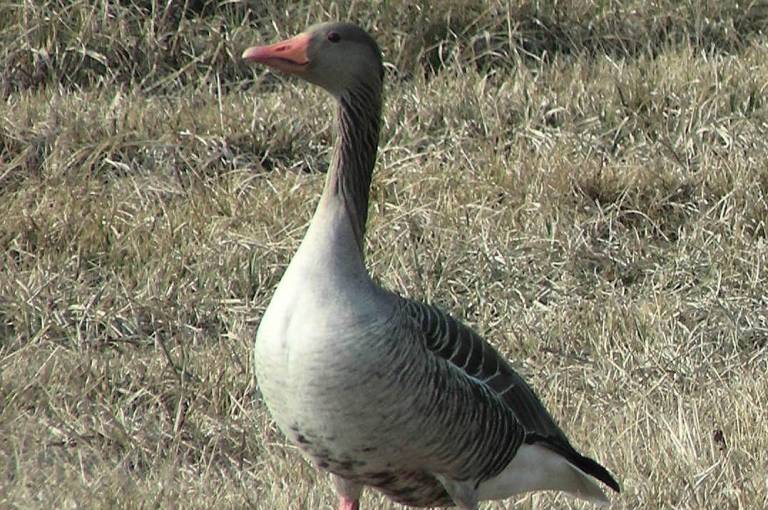
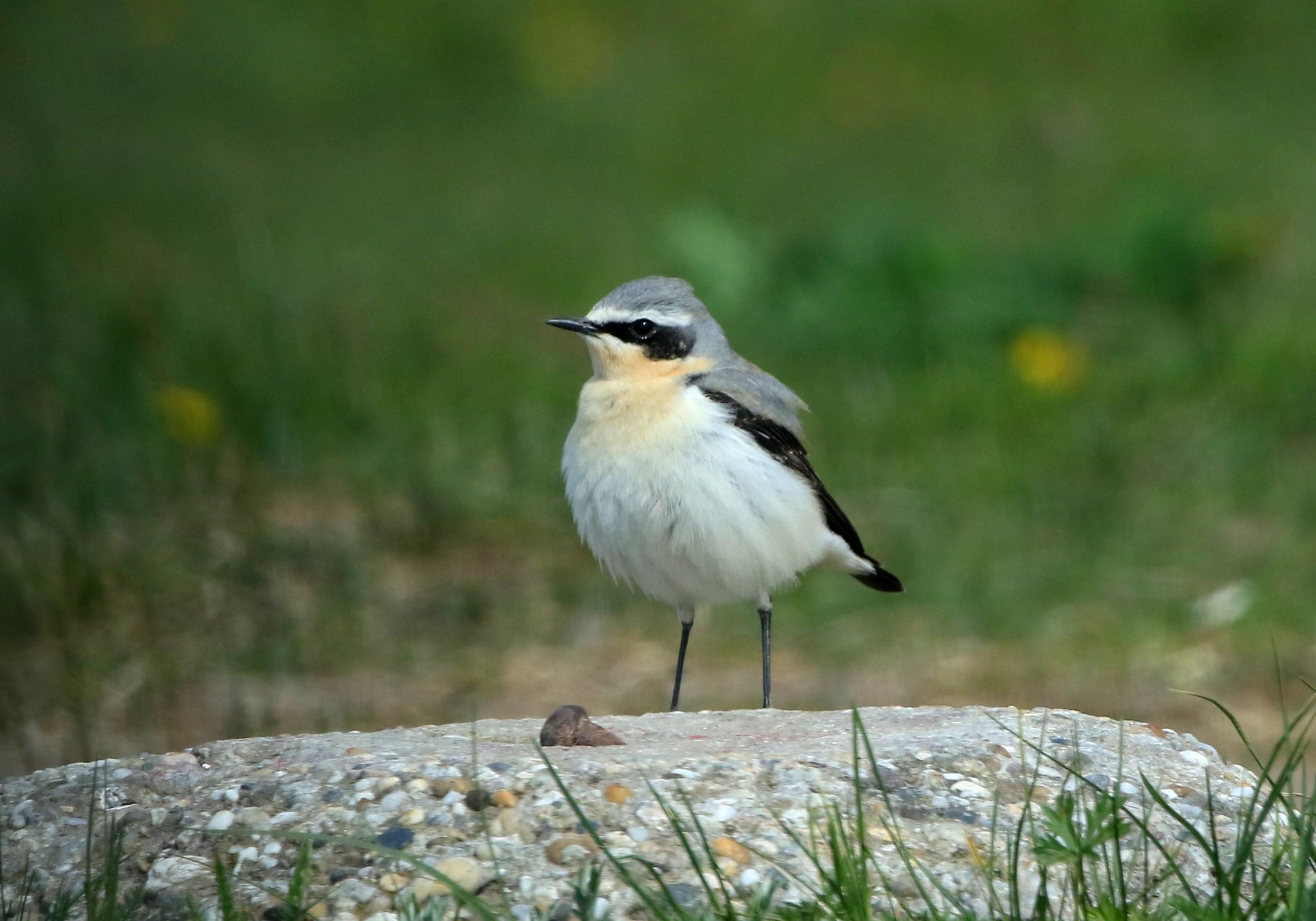
Oenanthe oenanthe · skaliarik sivý · Northern Wheatear
Alternative and historical names
Slovak names
- skaliarik sivý (Kovalik 2010)
- skalárik sivý (Kovalik 2010)
- skaliarik sivý (Matoušek 1990)
English names
- Northern Wheatear (IOC 2.5 2010)
- Wheatear (BOU 1923)
Scientific names
- Oenanthe oenanthe (AviList 2026)
- Oenanthe oenanthe (IOC 15.2 2026)
- Oenanthe oenanthe (IOC 2.5 2010)
- Oenanthe oenanthe (BOU 1923)
Taxonomic synonyms
- Oenanthe oenanthe schioleri (Salomonsen, 1927)
- Motacilla oeanthe (Linnaeus, 1758)
- Motacilla oenanthe (Linnaeus, 1758)
- Saxicola oenanthe (Linnaeus, 1758)
- Oenanthe oenanthe (Linnaeus, 1758)
Birding Slovakia database
This species through our community’s eyes
Species characteristics in Slovakia
- General occurrence
- migrant / M
- Breeding
- uncommon nidificant / Nu
- Migration
- common transmigrant / Tc
- Rarities committee:
- Does not require any reporting or registration by Raritties commitee
Conservation — Red Lists
- Slovakia 2023breeding population
- Breeding population Period: 2013–2023 Source: Demko M. a kol. 2025: Červený zoznam vtákov Slovenska: aktualizácia 2013 – 2023. Tichodroma 37: 107–117. Online 18. 1. 2026. DOI: 10.31577/tichodroma.2025.37.18. Príloha 1, s. 117, riadok 79, stĺpec 6 Criteria: A2a; C1
- Europe 2021
- Population scope unspecified Source: BirdLife International 2021: European Red List of Birds. Publications Office of the European Union, Luxembourg. Reported in: Demko M. a kol. 2025: Červený zoznam vtákov Slovenska: aktualizácia 2013 – 2023. Tichodroma 37: 107–117. Online 18. 1. 2026. DOI: 10.31577/tichodroma.2025.37.18. Príloha 1, s. 117, riadok 79, stĺpec 4
- World 2025
- Species Source: BirdLife International 2025: Species factsheets. Citované v Demko a kol. 2025, prístup 16. 4. 2025. Reported in: Demko M. a kol. 2025: Červený zoznam vtákov Slovenska: aktualizácia 2013 – 2023. Tichodroma 37: 107–117. Online 18. 1. 2026. DOI: 10.31577/tichodroma.2025.37.18. Príloha 1, s. 117, riadok 79, stĺpec 3
Previous assessments
- Slovakia 2013
- Breeding population Period: 2002–2012 Source: Demko M., Krištín A. & Pačenovský S. 2014: Červený zoznam vtákov Slovenska. SOS/BirdLife Slovensko, Bratislava. Zdroj stĺpca SK 2013 podľa poznámky 5 prílohy Demko a kol. 2025. Reported in: Demko M. a kol. 2025: Červený zoznam vtákov Slovenska: aktualizácia 2013 – 2023. Tichodroma 37: 107–117. Online 18. 1. 2026. DOI: 10.31577/tichodroma.2025.37.18. Príloha 1, s. 117, riadok 79, stĺpec 5 Category downgraded by 1 level due to surrounding populations.
Observation map

Detailed species observation statistics

Source: the Birding.sk database. Counts reflect observer contributions, not population size.
About this species
Distribution
It breeds across Europe and Asia, also reaching Greenland and parts of North America, and winters in Africa. In Slovakia it nests locally in open country from lowlands to mountains and is more widespread during spring and autumn passage. Migrants arrive in spring, with autumn stopovers especially in late summer and September.
Habitat
It favours short turf, bare soil and stones used as lookout points. Habitats include pastures, quarries, construction sites and mountain grassland. On passage it uses ploughed fields and other open ground where prey is accessible.
Breeding
The nest is concealed in a rock crevice, wall or hole in the ground. The female usually lays 5–6 eggs and performs most incubation. Both parents feed the young; secure cavities matter as much as nearby feeding ground.
Food
It collects insects and other small invertebrates from the soil surface. Short runs alternate with pauses to scan, and birds also drop onto prey from stones.
Interesting fact
The white rump and inverted black T on the tail are conspicuous as it flies away. Even North American populations travel to African winter quarters, linking unusually distant parts of the Northern Hemisphere.
Sources: Slovak Wikipedia · English Wikipedia · BTO BirdFacts
Sign in to send private feedback on the text to our editors.
Explore further
Overview and identification
Descriptions, identification and names.
- Slovak Wikipedia ↗
Taxon account in Slovak: distribution, biology and references for further reading.
https://sk.wikipedia.org/wiki/Skaliarik_siv%C3%BD - English Wikipedia ↗
Taxon account in English: distribution, biology and taxonomic context.
https://en.wikipedia.org/wiki/Northern_wheatear - BTO BirdFacts ↗
Biology and identification in English; population figures and trends refer to Britain.
https://www.bto.org/learn/about-birds/birdfacts/wheatear
Sounds, photographs and video
Recordings and visual comparisons.
- BTO: identifying Whinchat, Stonechat and Wheatear ↗
English comparative identification video covering appearance and vocalisations.
https://www.bto.org/learn/skills/bird-identification/videos/chats
Data and research
Occurrences, distribution and research.
- Slovak Red List: Northern Wheatear ↗
Species entry in Appendix1,p.59 (2023 assessment).
https://www.tichodroma.sk/pdfs/37/Tichodroma_37_18_Demko.pdf#page=11