


Sylvia atricapilla · penica čiernohlavá · Eurasian Blackcap
Alternative and historical names
Slovak names
- penica čiernohlavá (Kovalik 2010)
- penica černohlavá (Kovalik 2010)
- penica čiernohlavá (Matoušek 1990)
English names
- Eurasian Blackcap (IOC 2.5 2010)
- Blackcap (BOU 1923)
Scientific names
- Sylvia atricapilla (AviList 2026)
- Sylvia atricapilla (IOC 15.2 2026)
- Sylvia atricapilla (IOC 2.5 2010)
- Sylvia atricapilla (BOU 1923)
Taxonomic synonyms
- Motacilla atricapilla (Linnaeus, 1758)
- Sylvia atricapilla (Linnaeus, 1758)
Birding Slovakia database
This species through our community’s eyes
Species characteristics in Slovakia
- General occurrence
- migrant / M
- Breeding
- common nidificant / Nc
- Migration
- common transmigrant / Tc
- Wintering
- rare wintering / Wr
- Rarities committee:
- Does not require any reporting or registration by Raritties commitee
Observation map

Detailed species observation statistics

Source: the Birding.sk database. Counts reflect observer contributions, not population size.
About this species
Distribution
It breeds in Europe, northwestern Africa and western Asia. European populations range from resident to migratory. In Slovakia it is a common, widespread breeding warbler, but most birds leave for winter. It arrives early in spring and departs in autumn; small numbers may winter in favourable conditions with accessible fruit.
Habitat
It inhabits woodland with shrubby undergrowth, riverside vegetation, parks, gardens and dense hedges. Shadier, damper places suit it when enough cover is available. Song often comes from a dense crown, although feeding birds also move much lower.
Breeding
The nest of grasses, roots and other fibres is concealed low in a shrub. A clutch usually contains 4–5 eggs. Both parents incubate and feed the young, sometimes raising a second brood during a long season.
Food
Insects and larvae dominate during nesting. From summer it makes extensive use of soft fruits such as elderberries and raspberries, also important to migrants.
Interesting fact
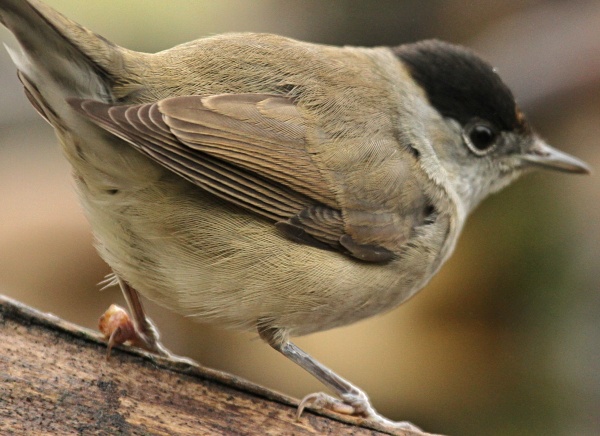
Adult males have black caps and females reddish-brown ones; juveniles can resemble females. Crown colour alone therefore cannot establish the age and sex of every autumn bird.
Sources: Slovak Wikipedia · English Wikipedia · BTO BirdFacts
Sign in to send private feedback on the text to our editors.
Explore further
Overview and identification
Descriptions, identification and names.
- Slovak Wikipedia ↗
Taxon account in Slovak: distribution, biology and references for further reading.
https://sk.wikipedia.org/wiki/Penica_%C4%8Diernohlav%C3%A1 - English Wikipedia ↗
Taxon account in English: distribution, biology and taxonomic context.
https://en.wikipedia.org/wiki/Eurasian_blackcap - BTO BirdFacts ↗
Biology and identification in English; population figures and trends refer to Britain.
https://www.bto.org/learn/about-birds/birdfacts/blackcap - Bird.watching: Eurasian Blackcap – identification and voice ↗
Slovak species lesson with identification features and an example vocalisation.
https://bird.watching.sk/sk/penica-ciernohlava-sylvia-atricapilla/
Sounds, photographs and video
Recordings and visual comparisons.
- BTO: identifying Blackcap and Garden Warbler ↗
English comparative identification video covering appearance and vocalisations.
https://www.bto.org/learn/skills/bird-identification/videos/blackcap-garden-warbler
























