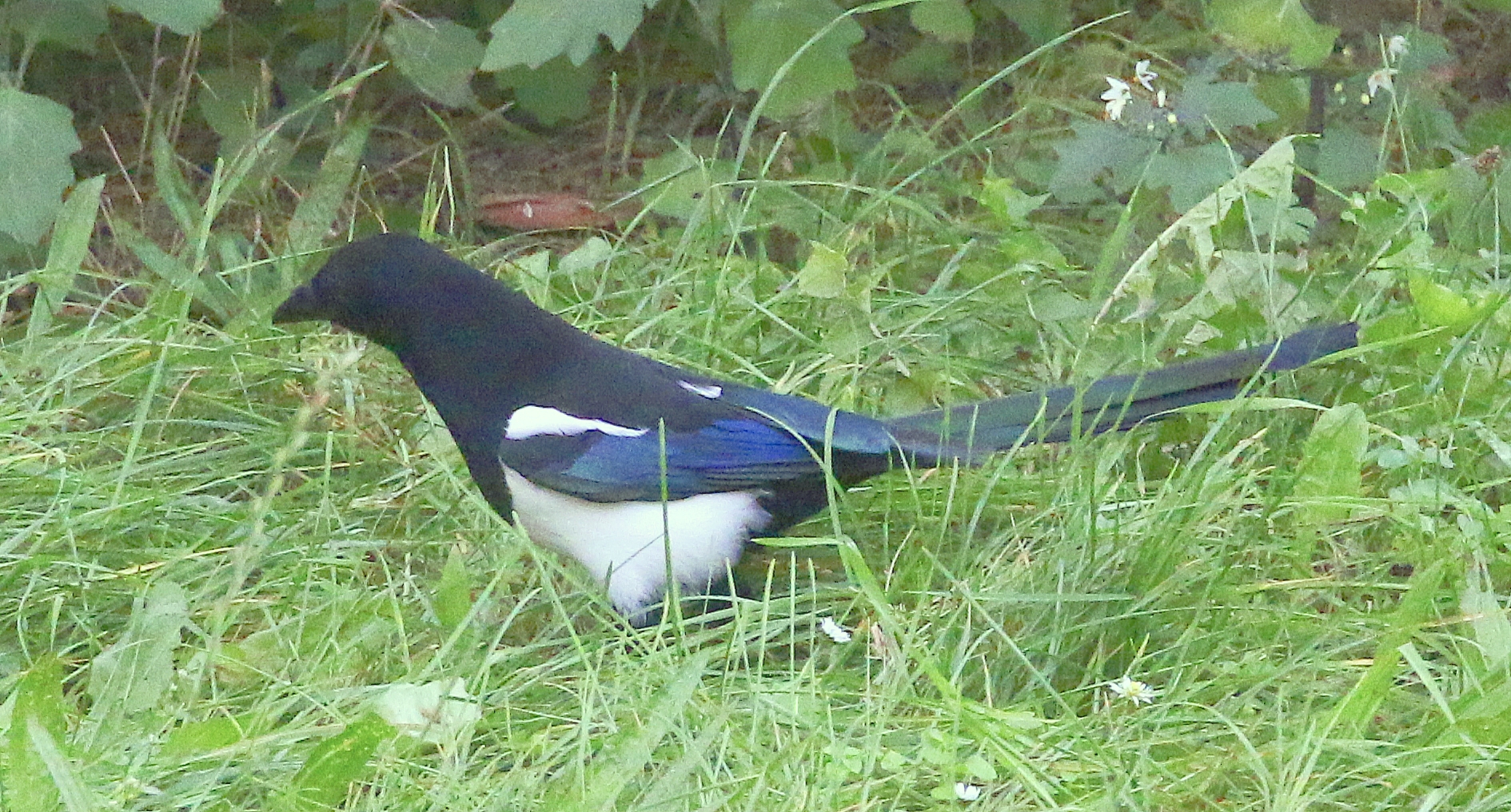
Pica pica · straka obyčajná · Eurasian Magpie
Alternative and historical names
Slovak names
- straka obyčajná (Kovalik 2010)
- straka čiernozobá (Kovalik 2010)
- straka čiernozobá (Matoušek 1990)
English names
- Eurasian Magpie (IOC 2.5 2010)
- Magpie (BOU 1923)
Scientific names
- Pica pica (AviList 2026)
- Pica pica (IOC 15.2 2026)
- Pica pica (IOC 2.5 2010)
- Pica pica (BOU 1923)
Taxonomic synonyms
- Pica galliae (Kleinschmidt, 1917)
- Pica caudata melanotos (Brehm, 1857)
- Corvus pica (Linnaeus, 1758)
- Corvus spec (Linnaeus, 1758)
- Pica pica (Linnaeus, 1758)
Birding Slovakia database
This species through our community’s eyes
Species characteristics in Slovakia
- General occurrence
- resident / R
- Breeding
- common nidificant / Nc
- Wintering
- common wintering / Wc
- Rarities committee:
- Does not require any reporting or registration by Raritties commitee
Observation map

Detailed species observation statistics

Source: the Birding.sk database. Counts reflect observer contributions, not population size.
About this species
Distribution
In its current narrow treatment it occupies much of Eurasia; North American magpies are separate species. In Slovakia it is a common resident breeder in open and settled landscapes. It occurs year-round and forms groups and communal roosts outside nesting. A winter concentration therefore does not equal the number of pairs breeding immediately around the roost.
Habitat
It favours trees and scrub beside meadows and fields, orchards, villages, urban parks and larger gardens. Extensive continuous forest is not typical. Food is often collected on the ground, including around human settlements.
Breeding
The large stick nest is built in a tree or dense bush, often with a roof, a mud-reinforced cup and a fine lining. The female usually lays 5–7 eggs and incubates them. Both parents feed the chicks, normally raising one brood annually.
Food
It is omnivorous, taking insects and other invertebrates, seeds, fruits, carrion and available food scraps. Eggs, nestlings and other small vertebrates are taken occasionally.
Interesting fact
Black plumage shines blue and green in the light, so the bird is more than simply black and white. The long tail and white wing areas create a recognisable silhouette even during a brief flight.
Sources: Slovak Wikipedia · English Wikipedia · BTO BirdFacts
Sign in to send private feedback on the text to our editors.
Explore further
Overview and identification
Descriptions, identification and names.
- Slovak Wikipedia ↗
Taxon account in Slovak: distribution, biology and references for further reading.
https://sk.wikipedia.org/wiki/Straka_oby%C4%8Dajn%C3%A1 - English Wikipedia ↗
Taxon account in English: distribution, biology and taxonomic context.
https://en.wikipedia.org/wiki/Eurasian_magpie - BTO BirdFacts ↗
Biology and identification in English; population figures and trends refer to Britain.
https://www.bto.org/learn/about-birds/birdfacts/magpie