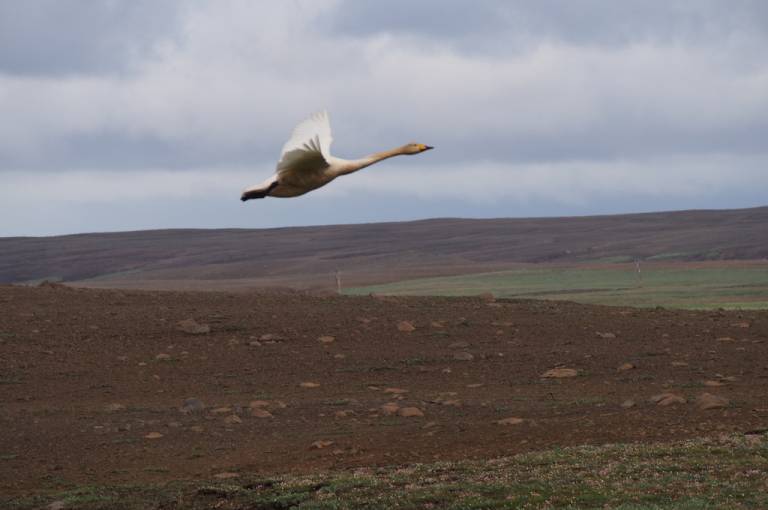
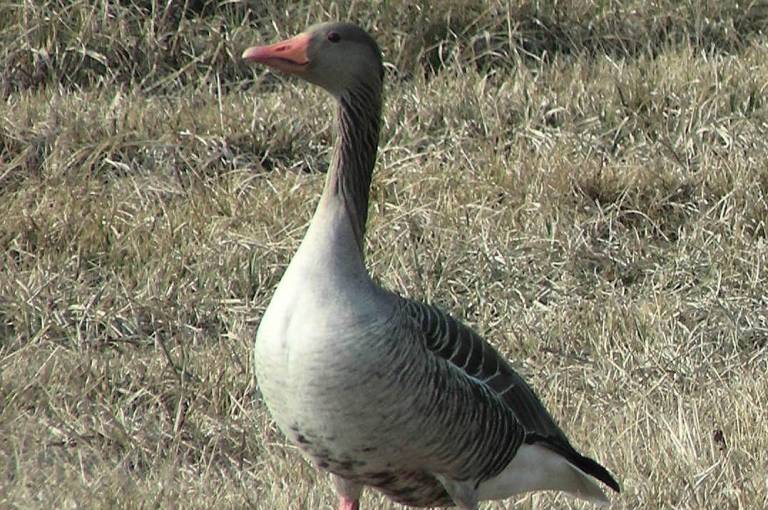
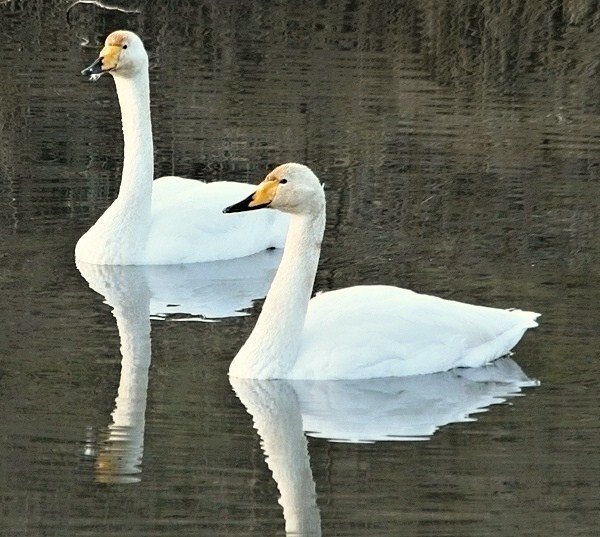
Cygnus cygnus · labuť spevavá · Whooper Swan
Alternative and historical names
Slovak names
- labuť spevavá (Kovalik 2010)
- labuť spevavá (Matoušek 1990)
- labuť spevavá (Ferianc 1986)
English names
- Whooper Swan (IOC 2.5 2010)
- Whooper Swan (BOU 1923)
Scientific names
- Cygnus cygnus (AviList 2026)
- Cygnus cygnus (IOC 15.2 2026)
- Cygnus cygnus (IOC 2.5 2010)
- Cygnus cygnus (BOU 1923)
Taxonomic synonyms
- Anas cygnus (Linnaeus, 1758)
- Anas spec (Linnaeus, 1758)
- Olor cygnus (Linnaeus, 1758)
- Cygnus cygnus (Linnaeus, 1758)
Birding Slovakia database
This species through our community’s eyes
Photographs by category
Species characteristics in Slovakia
- Breeding
- rare nidificant / Nr
- Migration
- uncommon transmigrant / Tu
- Wintering
- uncommon wintering / Wu
- Rarities committee:
- Sigthings of this specie are registered by Raritties commitee
Conservation — Red Lists
- Slovakia 2023breeding population
- Breeding population Period: 2013–2023 Source: Demko M. a kol. 2025: Červený zoznam vtákov Slovenska: aktualizácia 2013 – 2023. Tichodroma 37: 107–117. Online 18. 1. 2026. DOI: 10.31577/tichodroma.2025.37.18. Výsledky, s. 112, výslovne menovaný druh Druh uvedený v texte medzi 19 druhmi NA.
Observation map

Detailed species observation statistics

Source: the Birding.sk database. Counts reflect observer contributions, not population size.
About this species
Distribution
Its breeding range extends from Iceland across northern Europe into Asia. It moves south for winter, and Slovakia lies within its regular but relatively scarce passage and winter range. Breeding here is exceptional; the first confirmed case dates from 2019. Most observations therefore still fall outside the breeding season.
Habitat
In its home range it uses shallow lakes and vegetated wetlands. In Slovakia it may be found on ice-free rivers, reservoirs and fishponds, often with other swans. It also feeds in surrounding fields and meadows.
Breeding
The substantial nest of plant material is placed beside water or in dense wetland vegetation. The female incubates while the male guards the surroundings. Both parents care for the young, which may stay with them through their first winter.
Food
It mainly eats aquatic plants, grasses and crops. Its long neck reaches submerged vegetation, but it also feeds on land.
Interesting fact
Its loud trumpeting calls contrast strongly with the quieter sounds of the Mute Swan. An arriving flock may first be detected by voice, before the yellow-and-black bills can be made out at a distance.
Sources: Slovak Wikipedia · English Wikipedia · BTO BirdFacts · First Whooper Swan breeding in Slovakia
Sign in to send private feedback on the text to our editors.
Explore further
Overview and identification
Descriptions, identification and names.
- Slovak Wikipedia ↗
Taxon account in Slovak: distribution, biology and references for further reading.
https://sk.wikipedia.org/wiki/Labu%C5%A5_spevav%C3%A1 - English Wikipedia ↗
Taxon account in English: distribution, biology and taxonomic context.
https://en.wikipedia.org/wiki/Whooper_swan - BTO BirdFacts ↗
Biology and identification in English; population figures and trends refer to Britain.
https://www.bto.org/learn/about-birds/birdfacts/whooper-swan - BTO: Identifying winter swans: Whooper and Bewick's ↗
English identification video comparing this taxon with similar species and explaining distinguishing features.
https://www.bto.org/learn/skills/bird-identification/videos/wild-swans
Data and research
Occurrences, distribution and research.
- First Whooper Swan breeding in Slovakia ↗
Original scientific report of confirmed breeding in 2019 (PDF).
https://www.tichodroma.sk/pdfs/31/Tichodroma_31_mojzis%26kerestur.pdf - State Nature Conservancy: identification, ecology and conservation – Cygnus cygnus ↗
Slovak expert profile with morphology, ecology and species conservation information.
https://www.biomonitoring.sk/Registration/AtlasAnimal/Detail/48684