


Fringilla coelebs · pinka obyčajná · Eurasian Chaffinch
Alternative and historical names
Slovak names
- pinka obyčajná (Kovalik 2010)
- pinka lesná (Kovalik 2010)
- pinka lesná (Matoušek 1990)
English names
- Common Chaffinch (IOC 2.5 2010)
- Chaffinch (BOU 1923)
Scientific names
- Fringilla coelebs (AviList 2026)
- Fringilla coelebs (IOC 15.2 2026)
- Fringilla coelebs (IOC 2.5 2010)
- Fringilla coelebs (BOU 1923)
Taxonomic synonyms
- Fringilla coelebs Linnaeus, 1758
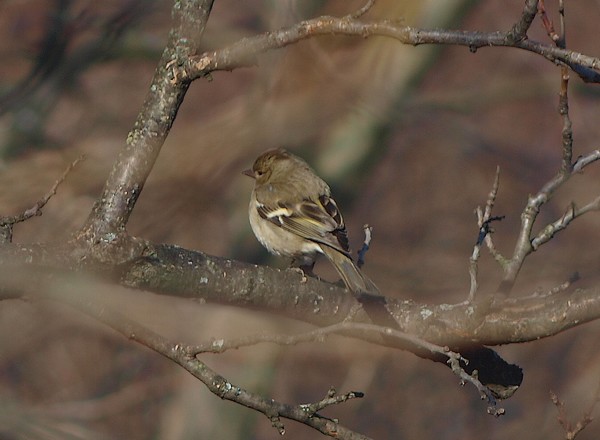
Birding Slovakia database
This species through our community’s eyes
Species characteristics in Slovakia
- General occurrence
- some are resident, some are migratory / R+M
- Breeding
- common nidificant / Nc
- Migration
- common transmigrant / Tc
- Wintering
- common wintering / Wc
- Rarities committee:
- Does not require any reporting or registration by Raritties commitee
Observation map
Detailed species observation statistics

Source: the Birding.sk database. Counts reflect observer contributions, not population size.
About this species
Distribution
The Chaffinch occupies much of Europe and western Asia. It is one of Slovakia’s most widespread woodland breeders, occurring from lowlands to the upper treeline. It can be seen year-round, although some local birds migrate and northern populations arrive in winter. Passage can also produce large flocks over open country.
Habitat
Look in broadleaved, mixed and coniferous woodland, parks, orchards and gardens with trees. In winter it often feeds on the ground in fields and beneath trees. Its loud song from the canopy is especially useful in spring.
Breeding
The female builds a neat cup in a branch fork. Moss and lichens, also attached with spider silk, camouflage its outside. Usually 4–5 eggs are laid, and both parents bring food to the chicks.
Food
Seeds collected from the ground dominate outside the breeding season. While raising young it catches mainly small insects, caterpillars and spiders in trees and lower vegetation.
Interesting fact
Chaffinch song has a recognisable structure but varies between regions. These local “dialects” also reflect learning: a young male develops his song by listening to other Chaffinches.
Sources: Slovak Wikipedia · English Wikipedia · BTO BirdFacts
Sign in to send private feedback on the text to our editors.
Explore further
Overview and identification
Descriptions, identification and names.
- Slovak Wikipedia ↗
Taxon account in Slovak: distribution, biology and references for further reading.
https://sk.wikipedia.org/wiki/Pinka_oby%C4%8Dajn%C3%A1 - English Wikipedia ↗
Taxon account in English: distribution, biology and taxonomic context.
https://en.wikipedia.org/wiki/Eurasian_chaffinch - BTO BirdFacts ↗
Biology and identification in English; population figures and trends refer to Britain.
https://www.bto.org/learn/about-birds/birdfacts/chaffinch
Sounds, photographs and video
Recordings and visual comparisons.
- BTO: identifying Chaffinch and Brambling ↗
English comparative identification video covering appearance and vocalisations.
https://www.bto.org/learn/skills/bird-identification/videos/chaffinch-brambling


