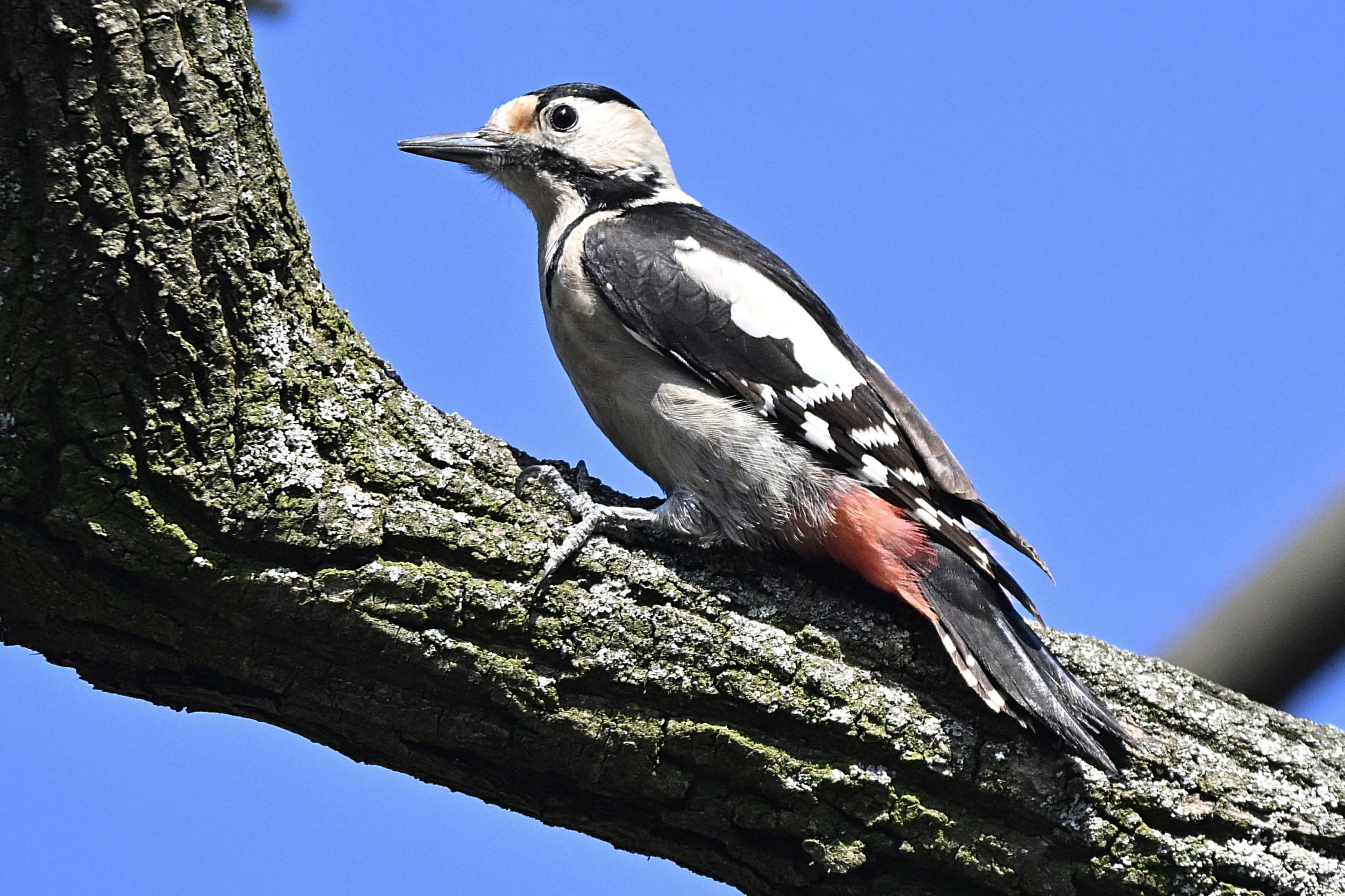
Dendrocopos syriacus · ďateľ hnedkavý · Syrian Woodpecker
Alternative and historical names
Slovak names
- ďateľ hnedkavý (Kovalik 2010)
- dateľ hnedkastý (Kovalik 2010)
- ďatel sýrsky (Kovalik 2010)
- ďateľ hnedkavý (Matoušek 1990)
English names
- Syrian Woodpecker (IOC 2.5 2010)
Scientific names
- Dendrocopos syriacus (AviList 2026)
- Dendrocopos syriacus (IOC 15.2 2026)
- Dendrocopos syriacus (IOC 2.5 2010)
Taxonomic synonyms
- Picus syriacus (Hemprich & Ehrenberg, 1833)
- Dendrocopos syriacus (Hemprich & Ehrenberg, 1833)
Birding Slovakia database
This species through our community’s eyes
Species characteristics in Slovakia
- General occurrence
- resident / R
- Breeding
- uncommon nidificant / Nu
- Wintering
- uncommon wintering / Wu
- Rarities committee:
- Does not require any reporting or registration by Raritties commitee
Observation map

Detailed species observation statistics

Source: the Birding.sk database. Counts reflect observer contributions, not population size.
About this species
Distribution
Originally a bird of southeastern Europe and southwestern Asia, it expanded northwestwards. First recorded in Slovakia in 1949, it now breeds regularly, particularly in warmer lowlands and basins. It is resident, and winter sightings in gardens are not unusual.
Habitat
Village gardens with old fruit trees, orchards, parks, cemeteries and avenues are characteristic habitats. It is closely associated with human-modified landscapes. It also uses tree lines and shelterbelts in open farmland, whereas continuous mountain forest is not its typical setting.
Breeding
In May and June it uses its own cavity, often in a fruit tree or another tree within a settlement. Both partners excavate, the male doing more work. A typical clutch contains 4–5 white eggs; both parents incubate and provision the chicks.
Food
It takes insects and larvae from trees, but fruit, nuts and seeds also form an important part of its diet. Orchards consequently provide both animal and plant food.
Interesting fact
Its resemblance to the Great Spotted Woodpecker can be misleading. Combining facial pattern and voice helps: the black stripe beside the white cheek does not join the nape, and its contact call sounds softer. One feature in a poor photograph may be insufficient.
Sources: Slovak Wikipedia · English Wikipedia
Sign in to send private feedback on the text to our editors.
Explore further
Overview and identification
Descriptions, identification and names.
- Slovak Wikipedia ↗
Taxon account in Slovak: distribution, biology and references for further reading.
https://sk.wikipedia.org/wiki/%C4%8Eate%C4%BE_hnedkav%C3%BD - English Wikipedia ↗
Taxon account in English: distribution, biology and taxonomic context.
https://en.wikipedia.org/wiki/Syrian_woodpecker - Bird.watching.sk: identification and voice – Dendrocopos syriacus ↗
Slovak species lesson describing appearance, voice and habitat, supporting field identification.
https://bird.watching.sk/sk/datel-hnedkavy-dendrocopos-syriacus/