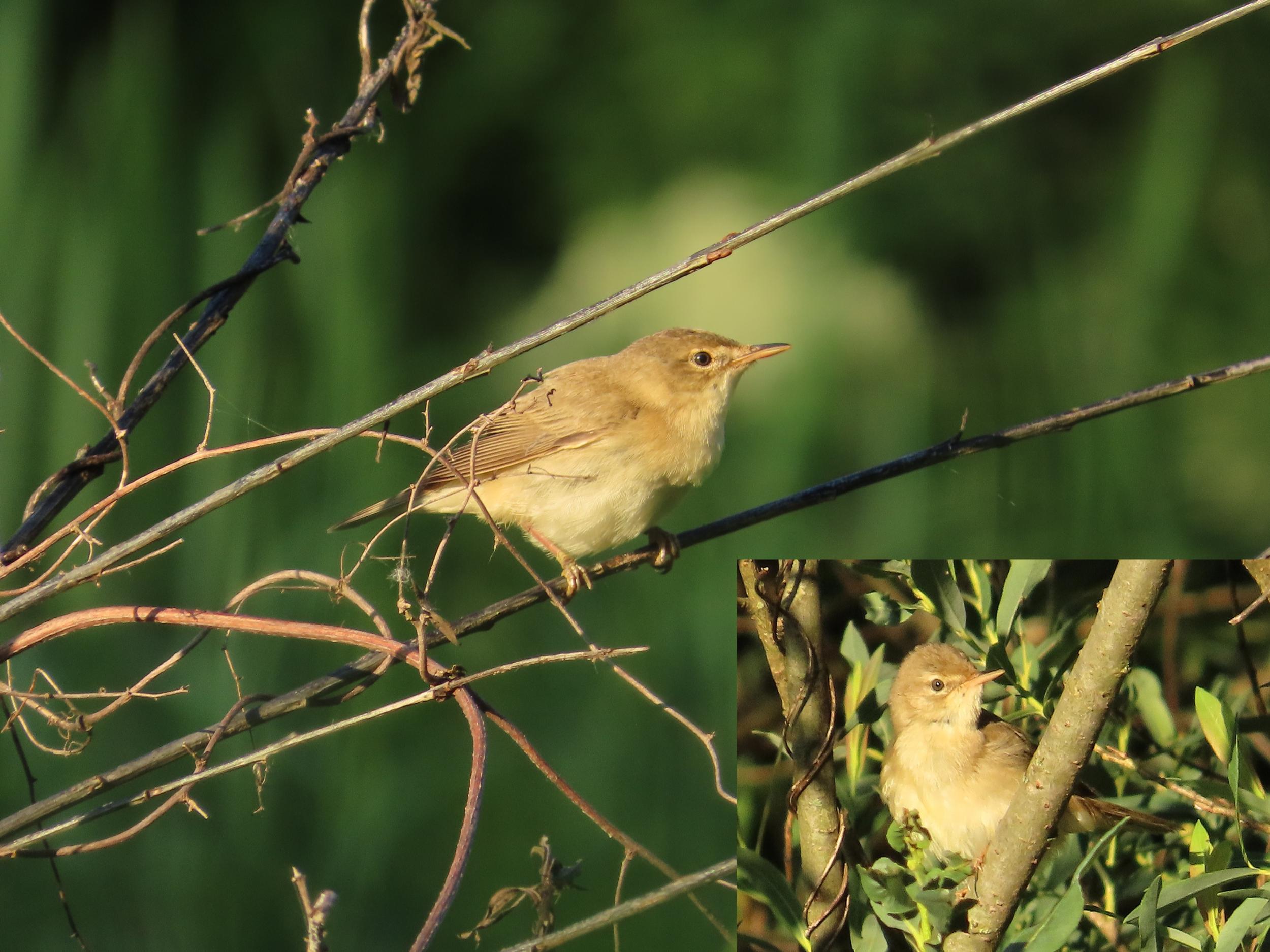
Acrocephalus scirpaceus · trsteniarik bahenný · Common Reed Warbler
Alternative and historical names
Slovak names
- trsteniarik bahenný (Kovalik 2010)
- trsteniarik močiarny (Kovalik 2010)
- trsteniarik bahenný (Matoušek 1990)
English names
- Eurasian Reed Warbler (IOC 2.5 2010)
- Reed-Warbler (BOU 1923)
Scientific names
- Acrocephalus scirpaceus (AviList 2026)
- Acrocephalus scirpaceus (IOC 15.2 2026)
- Acrocephalus scirpaceus (IOC 2.5 2010)
- Acrocephalus scirpaceus (BOU 1923)
Taxonomic synonyms
- Turdus scirpaceus (Hermann, 1804)
- Acrocephalus scirpaceus (Hermann, 1804)
Birding Slovakia database
This species through our community’s eyes
Photographs by category
Species characteristics in Slovakia
- General occurrence
- migrant / M
- Breeding
- common nidificant / Nc
- Migration
- common transmigrant / Tc
- Rarities committee:
- Does not require any reporting or registration by Raritties commitee
Observation map

Detailed species observation statistics

Source: the Birding.sk database. Counts reflect observer contributions, not population size.
About this species
Distribution
In its broad current treatment it occurs in Europe, parts of Asia and Africa; European populations winter in sub-Saharan Africa. In Slovakia it regularly breeds in lowland and basin wetlands, locally numerous in suitable reeds. It arrives in spring, passage birds add to local numbers from late summer, and departure occurs in autumn. Regular wintering is absent.
Habitat
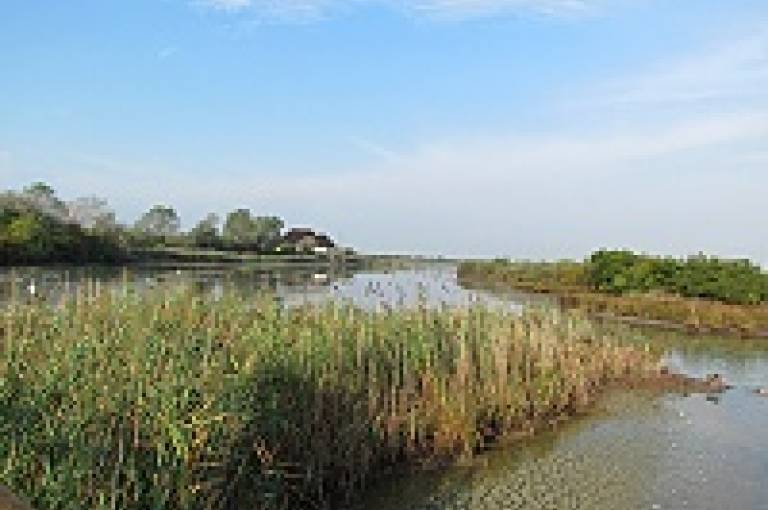
It uses reed fringes beside fishponds, lakes, river arms and canals. Even fairly narrow stands can suffice if they support a nest and provide food. Singing often comes from inside the reeds, with birds visible while moving between stems.
Breeding
The female weaves a deep nest attached to several vertical stems, often above water. A typical clutch contains 3–5 eggs. Both parents incubate and feed the young; some pairs raise another brood.
Food
Its principal food is insects and other small invertebrates collected in reeds and surrounding vegetation. Small fruits and other plant food are taken occasionally.
Interesting fact
It is a familiar host of the Common Cuckoo. Adults may feed a large cuckoo chick that has expelled their eggs or chicks; such a sight is not evidence of numerous surviving offspring of their own.
Sources: Slovak Wikipedia · English Wikipedia · BTO BirdFacts
Sign in to send private feedback on the text to our editors.
Explore further
Overview and identification
Descriptions, identification and names.
- Slovak Wikipedia ↗
Taxon account in Slovak: distribution, biology and references for further reading.
https://sk.wikipedia.org/wiki/Trsteniarik_bahenn%C3%BD - English Wikipedia ↗
Taxon account in English: distribution, biology and taxonomic context.
https://en.wikipedia.org/wiki/Common_reed_warbler - BTO BirdFacts ↗
Biology and identification in English; population figures and trends refer to Britain.
https://www.bto.org/learn/about-birds/birdfacts/reed-warbler
Sounds, photographs and video
Recordings and visual comparisons.
- BTO: identifying Sedge Warbler and Reed Warbler ↗
English comparative identification video covering appearance and vocalisations.
https://www.bto.org/learn/skills/bird-identification/videos/reed-warbler-sedge-warbler
Data and research
Occurrences, distribution and research.
- RBBP: Marsh Warbler monitoring and identification ↗
English survey method distinguishing Marsh from Reed Warbler by song.
https://www.rbbp.org.uk/wp-content/uploads/2020/10/Marsh-warbler-Gilbert-et-al.pdf